


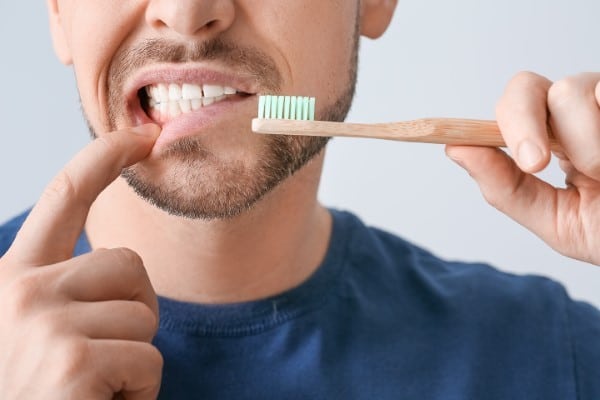
You spit into the sink and see pink. Maybe even red. It happens once, then again the next morning, and now you are wondering if something is actually wrong.
Quick answer: In most cases, bleeding gums point to plaque sitting along your gumline and irritating the tissue, a condition dentists call gingivitis. It is common, it is usually reversible, and it is your mouth telling you it needs a little more attention. But plaque is not the only reason your gums bleed, and the fix depends on what is actually causing it.
Here is what could be going on, broken down one cause at a time.
What’s In This Article
- Plaque buildup and early gum disease
- Brushing too hard
- Restarting a flossing routine
- Hormonal shifts
- Medications that affect clotting
- Vitamin and nutrient gaps
- Underlying health conditions
- When it might be something more serious
- What you can do at home
- Quick reference: cause and fix
- FAQs
1. Plaque Buildup and Early Gum Disease
Every day, a soft film of bacteria forms on your teeth. This is plaque, and if it is not cleared away thoroughly, it hardens along the gumline into tartar within about 24 to 72 hours. Your immune system reacts to that bacterial buildup by sending blood flow to the area, which makes the tissue swell, turn a deeper red, and bleed when it is touched, even gently.
This early stage is called gingivitis. The good news is that it does not involve bone loss, and it typically clears up once plaque is removed consistently through brushing, flossing, and a professional cleaning. Left alone, gingivitis can progress into periodontitis, a more advanced form of gum disease where infection moves below the gumline and starts affecting the bone that holds your teeth in place.
2. You Might Be Brushing Too Hard
It sounds backward, but scrubbing harder does not clean better; it just damages tissue. A lot of people press down with medium or firm bristles, thinking they are being thorough, when really they are wearing down enamel and irritating the gums until they bleed. If your toothbrush bristles flatten out within a few weeks of use, that is usually a sign you are applying too much pressure.
Try this: Switch to a soft bristle brush and let the bristles do the work with light, circular motions instead of aggressive back-and-forth scrubbing. Give it a couple of weeks and see if the bleeding settles down.
3. You Just Started Flossing Again
If you have not flossed regularly, your gums are not used to that kind of contact, and the first several sessions can cause some bleeding even if your gums are otherwise healthy. It is similar to how your gums might bleed slightly after a deep cleaning at the dentist. The tissue is adjusting.
Try this: Keep flossing every day. The bleeding usually fades within a week or two as your gums toughen up and any surface inflammation clears. If it does not improve, something else may be going on underneath.
4. Hormonal Shifts
Hormones change how your body responds to plaque, sometimes dramatically. Pregnant women often notice increased gum sensitivity and bleeding, sometimes called pregnancy gingivitis, because rising hormone levels make gum tissue more reactive to the same amount of plaque that previously caused no issues. Puberty, menstrual cycles, and starting or switching birth control can trigger a similar effect.
None of this means your oral hygiene routine has failed. It just means your gums need extra care during that window.
5. Medications That Affect Blood Clotting
Certain medications thin the blood or reduce platelet function, which makes any existing gum irritation bleed more noticeably. Aspirin, warfarin, and other anticoagulants fall into this category, along with some nonprescription pain relievers taken regularly.
Worth mentioning: If you started a new medication around the same time the bleeding began, bring it up at your next dental visit so it can factor into your care plan.
6. Vitamin and Nutrient Gaps
Your gums rely on certain nutrients to stay firm and repair themselves.
- Low vitamin C can weaken connective tissue and lead to bleeding gums, a link that goes all the way back to how sailors first identified scurvy centuries ago.
- Low vitamin K plays a direct role in blood clotting, and a shortage can produce a similar effect.
If your diet has been limited lately, or digestive issues have been affecting nutrient absorption, mention it to your physician alongside your dentist.
7. Underlying Health Conditions
Sometimes bleeding gums are a symptom of something happening elsewhere in the body.
- Diabetes reduces the body’s ability to fight infection, including the bacterial infection behind gum disease.
- Blood disorders and immune conditions can present with bleeding gums as an early symptom.
This does not mean every instance of bleeding gums signals a serious diagnosis, but heavy bleeding that does not respond to better habits, especially alongside fatigue or unexplained bruising, deserves a closer look.
8. When It Might Be Something More Serious
Occasional light bleeding after flossing for the first time in a while is one thing. These signs are different and point toward a more advanced stage of gum disease:
- Bleeding that shows up every day
- Gums that look swollen or pull away from the teeth
- Ongoing bad breath
- Teeth that feel loose
A trained dental specialist can evaluate whether your gum tissue shows signs of infection below the surface</a> that a mirror and a toothbrush simply cannot detect.
9. What You Can Actually Do at Home
- Brush twice a day with a soft-bristled brush, using gentle pressure and small circular motions rather than long horizontal strokes.
- Floss once daily, working the floss gently along the gumline rather than snapping it down hard between teeth.
- Rinse with a nonprescription antibacterial or saltwater rinse if your gums feel inflamed.
- Eat foods rich in vitamin C and vitamin K, like citrus fruits, leafy greens, and berries.
- Replace your toothbrush every three months, or sooner if the bristles start fraying.
Most people notice improvement within two weeks of tightening up these habits. If bleeding continues past that point, it is time to have it looked at rather than waiting it out.
10. Quick Reference: Cause and Fix
| Cause | What You’ll Notice | What Helps |
|---|---|---|
| Plaque and gingivitis | Red, swollen gums that bleed easily | Consistent brushing, flossing, and a professional cleaning |
| Brushing too hard | Bleeding plus receding or sensitive gums | Soft bristle brush, lighter pressure |
| New flossing habit | Bleeding that fades within two weeks | Stay consistent, do not stop |
| Hormonal changes | Bleeding tied to pregnancy or cycle changes | Extra attention to daily oral care |
| Medication | Bleeding that started after a new prescription | Mention it at your next visit |
| Nutrient gaps | Bleeding along with weak or slow healing tissue | Vitamin C and vitamin K rich foods |
| Underlying condition | Bleeding paired with fatigue or bruising | Talk to your physician and dentist |
Ready to Get Your Gums Checked Out?
Bleeding gums are your mouth’s way of asking for help, and the sooner it gets addressed, the easier it is to treat. Our team at Green Valley Smile Care in Henderson takes the time to figure out exactly what is causing your symptoms instead of guessing. Visit our dental clinic and let’s get your smile back to feeling healthy and strong.
Frequently Asked Questions :
1. Is it normal for gums to bleed a little when I brush?
Occasional light bleeding, especially if you just changed your brushing or flossing habits, is common and usually not a cause for alarm. Bleeding that happens every day is worth addressing.
2. Can stress cause my gums to bleed?
Indirectly, yes. Stress can weaken immune response and lead to habits like teeth grinding or skipped oral care routines, both of which can aggravate gum tissue.
3. How long does it take for gum bleeding to stop once I improve my routine?
Most people see noticeable improvement within one to two weeks of consistent brushing and flossing. If nothing changes after that, a professional evaluation is the next step.
4. Should I stop flossing if my gums bleed?
No. Stopping usually makes it worse. Gentle, consistent flossing is what helps the tissue heal.
5. When should I see a dentist about bleeding gums?
If bleeding is heavy, lasts more than two weeks despite better home care, or comes with swelling, pain, or loose teeth, schedule a visit right away.